Creativity and Printmaking |
||
Talent is a very large word that discourages many from attempting to learn intaglio printmaking. I think of talent, not as an innate skill, but rather, as the desire and passion to learn something new. Below is a work by Professor Ralph Slatton. He explores the intaglio processes of aquatint and line etch. In this print, Slatton also reworks the impression with in wash, in preparation for etching these variations into future printed states. 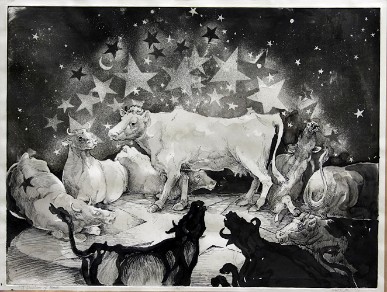 |
Phone: 423-439-5297 What is an intaglio? Intaglio (pronounced /ɪnˈtæli.oʊ/ in-tal-ee-oh) is printmaking process whereby the image is engraved, etched or scratched beneath the surface of a plate. The usual matrix or plate is copper or zinc, but in rare cases, steel. There are many methods to carve or bite into the surface of the matrix. Methods that use acids to bite beneath the surface of the plate is called an etching. Methods that use tools to cutting into its surface are either engraving or mezzotint. A less mechanical method is referred to as drypoint. As such, the metal is scratched with a sharp pointed tool. In order to print an intaglio, ink is rubbed into the lines or etched textures. A rag called a tarlatan is wiped across its surface to leave ink only in the lines. This is then printed, using an intaglio press. Moist paper is positioned over the plate. Wool blankets are used to cover these. The plate is pressed through an intaglio press, where tons of pressure are applied. Intaglio engraving was invented in Germany by the 1430s. Originally, the goldsmiths used engraving to decorate armour and other metal works. The breast plate was often inked and rubbed onto paper. Martin Schongauer was probably the earliest engraver, and Albrecht was one of the most famous. Dry point was also a German invention of about the fifteenth century, used to create all manner of documents and reproduction of paintings. Ralph Slatton is Professor of art in printmaking at East Tennessee State University. Slatton displays his intaglio prints on the following pages.
|
|

